KEKUATAN TIDAK DATANG DARI KEMAMPUAN FIZIKAL TETAPI IANYA DATANG DARI SEMANGAT YANG TIDAK PERNAH MENGALAH. BERUSAHA MENCARI DAN MENAMBAH ILMU BUKANNYA MENGHARAPKAN APA YANG ADA.

Thursday, 13 September 2012

PILIH OPSYEN PENDIDIKAN KHAS?

Kebelakangan ini ramai guru aliran perdana sudah berminat untuk mengajar murid-murid pendidikan khas. Lonjakan kecemerlangan program pendidikan khas mutakhir ini telah membuktikan komitmen guru-guru pendidikan  khas dan kebolehan murid keperluan khas berdaya saing dengan rakan sebaya. Kalau tidak dipecahkan ruyung manakan dapat sagunya.

Cabaran  hebat yang dilalui oleh guru-guru pendidikan khas telah menaikkan semangat mereka bagi membuktikan bahawa kelompok mereka juga mampu mencipta sesuatu kejayaan yang diimpikan. Cabaran  itulah yang yang akan menjadikan kekuatan semangat untuk terus bangun dari pandangan negatif segelintir masyarakat dan rakan sekerja terhadap pendidikan khas.

Maka tidak hairanlahkenapa ramai guru aliran perdana beria-ia mahu turut mengajar murid-murid pendidikan khas ini. Dalam era transformasi pendidikan ini pelbagai perubahan akan dapat dilihat tidak kurang juga dengan program pendidikan khas. Semoga pendidikan khas tidak lagi dilihat sebagai satu batu loncatan untuk mendapat kenaikan pangkat atau melepaskan diri dari beban tugas.

Di mana-mana pun beban itu tetap ada sekiranya kita anggap kerja itu satu beban. Namun jika kita menganggap kerja itu satu ibadah maka beban itu akan menjadi satu tanggungjawab yang harus dipikul di dunia dan akhirat. Pastikan niat itu betul supaya hidup kita dan generasi kita pada masa akan datang tidak menerima kesan akibat niat yang tidak baik di dalam hati kita. Allah maha mengetahui segalanya , semua perkara kita tidak dapat selindung dari pengetahuanNYA.

Adakah anda semua benar-benar  bersedia menjadi guru pendidikan khas atau sebaliknya hanya anda sahaja yang mengetahuinya. Tanya hati anda semula jika suatu masa dulu anda pernah memandang " sepi " dengan murid pendidikan khas ini tetapi hari ini anda memohon utnk mengajar mereka pula. Adakah itu sekadar untuk menebus kesalahan lalu atau melarikan diri dari tekanan dan beban tugas.

Tepuk dada tanya selera kerana tidak guna anda menyesal selepas anda memilih unutk menjadi guru pendidikan khas.

Thursday, 16 August 2012

CIRI-CIRI AUTISME


pelajar autisma mengalami masalah ataupun gangguan dalam bidang berikut :

1) KOMUNIKASI

- sukar diajak bercakap atau dilihat mempunyai simptom masalah pendengaran kerana tidak mengendahkan apa yang diperkatakan oleh orang lain.
- jarang menggunakan bahasa dan mempunyai perkembangan bahasa yang lambat atau tiada langsung
- meniru ayat atau perkataan orang lain (echolalia)\

2) INTERAKSI SOSIAL

- suka bersendirian dan suka menjauhkan diri dan duduk di suatu sudut
- tiada kontak mata dan sentiasa mengelak daripada memandang muka orang lain
- tidak gemar bermain dan sentiasa mengelak daripada memandang muka orang lain

3) GANGGUAN DERIA

-sensitif pada sentuhan
- tidak suka dipeluk atau dipegang
- kurang sensitif pada rasa sakit ataupun takut

4) POLA BERMAIN

-tidak suka bermain dengan rakan sebaya
- apabila ia menyukai sesuatu benda, terus dipegang dan dibawa ke mana-mana sahaja
- suka dengan objek-objek yang berputar seperti kipas angin.

5) TINGKAH LAKU

- sama ada hiperaktif atau pun hipoaktif
- dapat duduk dalam satu jangka masa yang lama tanpa melakukan apa aktiviti mahupun pergerakkan
-melakukan pergerakkan yang sama dan berulang-ulang cth (mundar-mandir, menepuk-nepuk)

6) EMOSI

-sering marah, ketawa, senyum dan menangis tanpa sebab
- mengamuk tanpa terkawal jika tidak turuti sesuatu kemahuan
- ada kalanya akan mencederakan diri mereka sendiri.

Bagaimana Membantu Murid Autistik


1) Guru pedamping

- pelajar Autisma mempunyai masalah dalam menguasai kemahiran bersosial, manakala di Sekolah guru lebih tertumpu cara pengajaran dalam kumpulan.
- guru akan memberikan penerangan secara berulang dan membantu mengangkat tangan pelajar untuk memanggil cikgu.


2) Pendedahan kepada guru aliran perdana


- cara pengajaran bagi pelajar autisma berbeza tidak mengikut pengalaman dan logik. guru perlu tahu cara kaedah memberi gambaran dan secara visual kepada berkeperluan khas, Autisma.


3) Gambaran yang mudah difahami


contohnya gambar untuk berinteraksi atau susunan jadual. Ajar pelajar cara sesuai untuk meminta sesuatu dan beri pinjam barang yang dikehendaki jika mereka gunakan cara hubungan atau komunikasi yang baik. Jika tidak, dia akan kembali ke cara negatif dengan mengamuk apabila permintaannya tidak dipenuhi.

Gunakan konsep pembayang awal. Kalau mahu menghentikan sesuatu aktiviti, beri amaran bahawa ia akan ditamatkan dalam masa beberapa minit supaya kanak-kanak itu bersedia. Jangan berhenti mendadak kerana walaupun mereka tahu bercakap,pelajar autisme ada masalah kenali konsep masa. contoh gunakan kad bergambar.


- Contohnya ‘lagi lima minit kita akan tutup televisyen’ atau ‘dalam kiraan lima kita akan berhenti bermain’. Guru perlu mengira penurunan masa dengan terang supaya pelajar autisma mendengarnya.

4)  Kaedah Multi sensori........melibatkan semua deria utama murid dalam pnp.


Autism from a Father's Point of View


by Stuart Duncan
One of the more common questions I get from people that give seminars, write journalism columns or otherwise somehow speak to many people at once is, “what advice would I give to parents that have just had their child diagnosed with autism?”
Here it is, in 4 parts.

1. Be selfless

When the doctor says those 3 scary little words “Autism Spectrum Disorder”, your heart sinks. No matter how positive you are, no matter how optimistic and no matter what great things you’ve heard about autism… it’s a heavy weight to bear.
In that instant, all of our hopes and dreams for our child are lost. We see a little human being with all of our visions of the future beyond their grasp. We see a child that will never be all of the things we thought they could be.
The thing is, those are our hopes. They are our dreams. They are our visions of the future. They are what we think that child should grow up to be. Us… us… US.
Letting go of that is hard. Some parents are never able to let that go.
But you have to realize, that’s your selfish side speaking. And I’m not saying that it’s not ok. It’s perfectly understandable and acceptable to be selfish where it pertains to your child. We all want what’s best for our children. We all want our children to reach for the stars and beyond.
But, you see, they will reach for the stars. It’ll just be in a different way.
They might not grow up to be like mom or dad and they might not even grow up to do all the other cool things you’ve imagined they could do but what they do decide to do, will be amazing.
They might not be your dreams or what you envisioned but, if you learn to let go of that and support your child in their dreams, you’ll find that nothing was ever truly lost.
You may be saying, “that’s all well and good for children that progress well and go to school and can manage on their own but my child will never have that”, it is not my intention to dismiss your burden. And all of the things I’m saying here will still apply. It will just be even harder still. And to you, I’d like to address this further in the next part…

2. Take stock in what you have

Sometimes I meet parents that are just so dark. They feel like they’ve lost everything and that their child was lost to them. They really believe that autism has stolen their child and ruined their future. And it hurts. It hurts me because no one should ever have to feel that way. And there’s nothing I can say or do that will help them.
But maybe, if a parent who is on the path towards feeling that way can be reached out too, perhaps those feelings can be prevented or avoided.
I’d like to tell you about my visits to Sick Kids Hospital with my son. One time for surgery and one time for allergy testing.
Walking through a place like that, you see children without hair and looking very pale and weak. You see children missing limbs or even an eye. You see children that are unable to see, hear and even those that are unable to move.
The hardest, I think, is seeing parents that are holding each other, crying so hard that in one moment are crying out louder than you’ve ever heard and in the next moment, crying so hard that they can’t even make a sound.
They moved into the hospital to be with their child in those final months, sometimes years. They know real loss. They’ve lost their house and jobs. They’ve lost the lives they once knew because for the time they’ve been in there, life has moved on without them.
But their child was worth it. For as short as their life was, it was a life. A beautiful and wonderful life and that life deserved to be loved. That child struggled for every day that they could.
For those parents, it was hard. Very hard. Harder than I could ever imagine it being and will probably, hopefully, never truly know.
But being there was worth it.
The reason I’m saying this is that, whether your child has autism or not, your child is right there, in front of you and your child needs you to be there with them.
Don’t be off fighting your battles or mourning your losses. Instead, move in to their room and be there with them.
Yes, you could take away from this story that things could always be worse or that they could always be better but that’s not what I’m trying to tell you. Instead, do as those parents did, do as they wish they could continue doing right now.
Take stock in what you have and live it. Your child has autism. It’s not a death sentence, it’s not an ending. Their life will be different than what you expected and it might even get really hard, but your child is right there wanting you to be a part of it.

3. Support is where you give it

It might not seem like it at first, when you know so little about autism or the struggles that it will bring, but your experiences are already and will prove to be quite valuable.
Every day, people are sharing their stories online and in support groups and one day, if you’re willing, that could be you.
Right now, someone is wanting to hear about the process you had to go through to get the diagnosis complete. Someone is wanting to hear about how you are feeling right now. Right now, someone is wanting to hear that they’re simply not alone.
If you are willing to reach out, even just a little bit, people just like you will be wanting to reach back. But if you close yourself off and bury yourself in that feeling of being so very alone, which we all feel (it’s not just you), you’ll miss all of those shared stories and all of those shared experiences. That one smiling face or reassuring word that you needed at just the right time will be missed unless you are willing to first step out and offer a warm smile too.
Autism is so very different from person to person, family to family, life to life but at the same time, we all share something so common and so fundamental that we already have this bond that we only need build stronger… and that’s our children. Our children need us.
What more reason do we need to support each other?

Unconditional love4. Love unconditionally

Whether your child has autism or not, can remember Pi to a thousand places or bangs their head against the wall, will go on to big and successful things or live out their days in a care facility…. no matter what, you must love your child unconditionally.
Many people say it as just a figure of speech or, while understanding it’s meaning, don’t really take into account the real scale of it.
Loving unconditionally does not mean that you love your child despite autism. Loving unconditionally means that you love your child with autism.
That no matter what your child does have, doesn’t have, does do, doesn’t do, will become, won’t become, who they were, who they were not, none of it matters, not one piece of any of it will ever take away from who your child is or the love you have for them.
You don’t get to love your child except for the part of them you don’t like. That’s not how “unconditionally” works.
When you fall in love with your true love, your soul mate, your bride or groom to be for the rest of your life, you accept them at their best and their worst, they’re best features and even their faults. You love them for who they are and wouldn’t change a thing.
The same thing applies, even more so, for your child.
Love your child for who they are, not for who they are even though you wish they could have been someone else, or someone more. Love your child for what they can do, right now, not for what they can do even though you wish they could do more.
Love your child. Period. Just love your child. Your child is perfect because your child is your child.
One day, maybe not today and maybe not tomorrow but one day, you’ll look back and realize just how much of a difference that really makes. It may seem like such a trivial thing at the time but it’s not.
One day, your child will look back and will know that they were never meant to feel like less than they should be. They will never feel like a disappointment in your eyes. Not even a part of them. They will never feel like they were the cause for your lost hopes and dreams.
What you do today, by truly loving unconditionally, will be your autistic child’s source of strength in years to come.
Do you see how important that is? Do you see how powerful that is?
What I’m saying is, without true, real unconditional love, one day, your child will believe less in themselves than they should, than they really need to, because they’ll look back on all the times you were disappointed in how they were less than they should be, less than you wanted them to be. And they’ll doubt themselves. They’ll feel what you felt.
And it won’t be the autism that holds them back, it will be because of the flaws and faults you saw in them that whole time. They’ll believe it because you believed it and it will stop them from achieving their true potential.
I know, if your child was just diagnosed, that’s a lot to take in and it’s even harder to do. Chances are it will take time and even though it seems like a roller coaster of a ride, you do have time.
Just keep it in mind. Loving your child, unconditionally, truly unconditionally, could be what makes the biggest difference in their life. Not the autism or any other struggles that autism can bring.
Your love. It’s just that powerful.


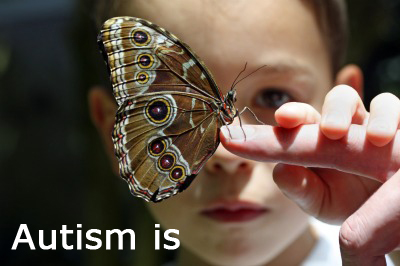
Autism is

I would like to talk to you about autism. I know, we talk about autism a lot, you and I. But somehow things have gotten off track and I really think that I need to make something very clear. Not for for you or my neighbor or for other people but for me, right here, right now.
I have been living with autism my entire life and didn’t even know it. It wasn’t until I discovered that my son has autism that I truly came to grips with what it really is. And I’m not talking about what I’ve read in medical research studies or transcripts or expert opinions or even public opinions. What I mean is, I know what autism is, to me.
autism isThis may sound a little strange but in a very general sense, autism is everything and it is nothing too.
Autism is the way a person perceives the world around them. It is the way they take it in, interact with it, experience it, process it and live with it. It’s the filter with which all reality flows through before becoming our own reality. It shapes a person’s past as well as their future. With each step forward, all that is involved in that step flows through a vail of autism which invariably alters the course they take towards their next step. Each step being a direct result of the step before it, exponentially affecting further steps ahead. We become a product of our combined experiences, each of which, affected and altered, whether for better or worse, as an effect of autism.
At the same time, autism is nothing, neither tangible or quantitative in it’s existence any more than any other thought, memory, expression, synaptic response or neurological interpretation to stimuli that every living thing is privileged with in it’s existence. It’s a unique perception unlike any other making it exactly the same as any other. It’s a tasteless, touchless, odorless, inaudible and invisible anomaly that isn’t really there.
There’s more, and this is important. So hear me out.
Autism is not a fight between parents. Autism is not a battle with the school board. It’s not about who is functioning higher or lower than someone else or even about what “functioning” even means nor is it about who should and shouldn’t be cured.
Autism is not about what a person looks like and it’s most certainly not about tendencies that a person might have, homicidal or otherwise. It’s not about taxing the system or making life hard on a parent and it’s definitely not about organ transplant bureaucracy.
Autism is not politics. It’s not religion. It’s not about you or me and it’s certainly not about you versus me.
I am tired. I’m tired of all of this.
I’m tired of reading stories in the news about mothers killing their autistic children. I’m tired of people making horrendous and false claims in the name of autism. I’m tired of the fighting, I’m tired of the name calling and I’m tired of the people who can’t admit when they’re wrong. I’m tired of people that are judgmental and I’m tired of the people who think it’s funny. I’m tired of people telling me what I should and shouldn’t believe, what I should and shouldn’t say and what I should and shouldn’t think.
I’m really, just tired. Very tired.
So here it is, as simple as can be.
Autism is me. It’s my son. It’s the little girl who can’t speak but screams with every breath she takes. It’s the little boy that completely loses control one moment but creates his own computer operating system the next.
Autism is the man that needs a heart transplant to live. Autism is the young woman that goes to Washington to fight for people she doesn’t even know but loves.
Autism is the life taken far too early by the parent that didn’t know what else to do. Autism is the life that wandered away from safety, scared and unknowing of the dangers around them.
Autism is not a disease. Autism is not a battlefield. Autism is not an opinion.
Figure it out. Work it out.
Because autism is a lot of people.
Autism is the perception, the experiences and the reality that effects and shapes what is to become a person’s life and yet, it’s nothing too, for all the same reasons.

Tuesday, 7 August 2012

GARIS PANDUAN GURU PENDAMPING PENDIDIKAN KHAS

1.      PENGENALAN.

1.1  Program inklusif akademik bermaksud satu rancangan khas bagi murid PPKIBP yang telah dikenalpasti mempunyai tahap kefungsian tinggi dan boleh belajar dalam kelas bersama-sama murid-murid aliran perdana dengan tujuan untuk melengkapi semaksimum yang mungkin bagi menduduki peperiksaan awam seperti UPSR, PMR, atau SPM.

1.2  Selain membantu murid PPKIBP menghadapi peperiksaan awam , program inklusif akademik juga member peluang kepada murid PPKIBP berinteraksi dan bersosial bersama murid aliran perdana secara positif dan efektif.

1.3  Garis panduan ini bertujuan untuk menyelaraskan pelaksanaan program inklusif oleh semua guru PPKIBP di samping menjelaskan tata cara melaksanakan program inklusif akademik yang lebih efektif dari segi  konsep guru bimbingan, penglibatan murid dalam aktiviti akademik dan social, keseimbangan jadual gujru, kefahaman dan penerimaan ibu bapa dan guru aliran perdana dan dapat meningkatkan tahap profesioanalisma guru PPKIBP secara komprehensif.

2.      GARIS PANDUAN PELAKSANAAN.

2.1  Mengenalpasti murid yang boleh mengikuti program inklusif samada separa inklusif
 ( memasuki kelas aliran perdana berdasarkan dua atau tiga mata pelajaran yang  
 dipilih sahaja)  atau inklusif  sepenuh masa ( memasuki kelas aliran perdana
berdasarkan semua mata pelajaran peperiksaan yang diambil.)

2.2  Murid yang dipilih mengikuti program inklusif akademik seharusnya boleh menguasai kemahiran membaca dan memahami petikan mudah, sekurang-kurangnya perkataan kvkvk dan dipersetujui oleh Jawatankuasa Program Inklusif.

2.3  Penubuhan Jawatankuasa Program  Inklusif Akademik Sekolah  yang terdiri daripada
Pengetua/Guru Besar,. GPK Pentadbiran, GPK Pendidikan Khas/ Penyelaras Pendidikan  Khas, semua guru mata pelajaran aliran perdana yang terlibat dan semua guru PPKIBP.

2.4  Murid PPKIBP yang dicalonkan sebagai murid inklusif perlu dibentangkan dalam
mesyuarat jawatankuasa program inklusif unutk mendapatkan pengesahan.


2.5  Setiausaha jawatankuasa program inklusif haruslah menghantar surat bagi
memaklumkan kepada ibu bapa tentang kemasukan anak mereka dalam program
 inklusif.

2.6  Antara aktiviti jawatankuasa program inklusif akademik  ialah member  taklimat kepada   guru aliran perdana dan ibu bapa murid PPKIBP tentang program inklusif.


2.7  Setiap orang guru PPKIBP perlu terlibat sebagai guru pembimbing mengikut mata
pelajaran sekurang-kurangnya dua kali seminggu.

2.8  Waktu bimbingan murid inklusif perlu ditulis dalam jadual  waktu dan dimasukkan
 dalam jumlah waktu mengajar dalam seminggu.


2.9  Waktu bimbingan adalah boleh di kelas aliran perdana ( guru pembimbing mesti
 dibenarkan menjalankan tugas ) atau waktu rehat dan selepas sesi persekolahan.

2.10          Walaupun tidak membimbing sepenuhnya mengikut waktu mata pelajaran aliran
       perdana tetapi mencukupi sekurang-kurangnya satu jam seminggu mengikut
       persetujuan ajk program inklusif akademik.


2.11          Program inklusif akademik tidak boleh diberi kepada seorang guru PPKIBP sahaja
      untuk mengurus dan membimbing murid inklusif kerana murid inklusif perlu
      bimbingan  daripada semua guru PPKIBP mengikut kepakaran mata pelajarannya.
      Dan setiap guru PPKIBP perlu diberi ruang mengembangkan kemahiran dan
      kecekapannya dalam   pengurusan dan pengajaran dalam kelas PPKIBP.

2.12          Guru Penolong Kanan Pendidikan Khas / Penyelaras boleh memlilih kelas yang
       sesuai untuk penempatan murid inklusif.


2.13          Penyeliaan ke atas guru pembimbing perlu dibuat oleh GPK Pendidikan Khas /
       penyelaras.

2.14          Kehadiran murid  program inklusif perlu direkodkan dalam Buku Jadual
       Kedatangan  Murid PPKIBP.

2.15          Guru Pembimbing perlu menulis rancangan pengajaran harian bimbingannya
       Serta merekodkan markah ujian bulanan dan peperiksaan penggal.


2.16          Guru pembimbing dan guru mata pelajaran aliran perdana perlu berbincang
       dalam  usaha menjayakan program inklusif.

2.17          Pada  akhir penggal program inklusif akademik ini perlu dinilai oleh jawatankuasa
      dari  segi keberkesanan pelaksanaan, pencapaian murid dan tindakan susulan.


2.18          Sebagai motivasi, murid-murid yang mengikuti program inklusif perlu diberi
       ganjaran  berupa hadiah dan cenderahati yang sesuai.


2.19          Program inklusif akademik perlu ada dokumentasi atau fail-fail seperti minit
       mesyuarat  AJK, fail maklumat murid dan fail prestasi murid.

Bahagian  Yang Bertanggungjawab Memurnikan Panduan Inklusif
CAWANGAN PERANCANGAN DAN PENILAIAN(BPK)

Wednesday, 18 July 2012

PERANAN SENI DALAM PENDIDIKAN


Peranan Seni dalam Pendidikan
Mengikut Dr. Sharifah Norul Akmar Syed Zamri (2006), asas pendidikan di rujuk sebagai “3R” iaitu membaca, menulis dan mengira. Penggunaan huruf, “R” adalah satu perkataan yang sesuai digunakan dalam Bahasa Inggeris tetapi mungkin tidak dalam Bahasa Melayu. Seni perlu dijadikan “R” keempat atau literasi asas kerana Seni dalam Pendidikan memainkan peranan yang penting dalam proses pembelajaran dan pengajaran. Terdapat 3 bidang utama dalam mata pelajaran ini iaitu Seni Visual, Seni Muzik dan Seni Pergerakan. Antara peranan-peranan Seni dalam Pendidikan ialah:
a)    Proses pengajaran dan pembelajaran menjadi lebih seronok

Pengajaran yang dilaksanakan dengan menggabungjalin pelbagai unsur seni dan berbeza dari kaedah pengajaran tradisional yang hanya menggunakan kapur dan papan tulis sebagai media dalam penyampaian maklumat dapat menjadikan murid berasa lebih seronok. Selain itu, murid akan berasa lebih selesa dan lebih mudah untuk memahami sesuatu tajuk yang diajar.

b)   Memupuk nilai kerjasama
Secara semula jadi, kebanyakan aktiviti Seni Dalam Pendidikan tidak dapat mengelakkan murid-murid daripada terlibat dalam kegiatan yang beransur kerjasama. Aktiviti berkelompok menuntut setiap individu bergerak dan berinteraksi secara bekerjasama untuk mencapai kejayaan bersama. Aksi-aksi yang terdapat dalam Seni Dalam Penidikan merangkumi aktiviti seni visual, muzik dan pergerakan mempunyai titik tolak interaksi social yang terjalin melalui deria sentuh.


c)    Memenuhi keperluan sosial yang asas

Apabila semua murid berpeluang menyertai aktiviti –aktiviti yang sesuai dengan minat dan kebolehan mereka, maka akan terbentuk satu situasi ideal yang dapat memenuhi kedua-dua matlamat social iaitu kemilikan dan keinginan diterima sebagai anggota kelompok.

Murid-murid mahukan dirinya diterima sebagai anggota sebuah kelompok dan pada masa yang sama memerlukan kasih sayang. Dalam kegiatan Seni Dalam Pendidikan, keperluan untuk belaian sekurang-kurangnya dipenuhi melalui pujian dan galakan yang diberi sebaik sahaja mereka mempersembahkan aktiviti yang menarik.

Perhubungan mesra antara murid dengan murid dapat mewujudkan suasana yang harmoni dan menyebabkan murid merasakan bahawa guru dan rakan-rakan prihatin terhdap dirinya danb menghargai bakat yang dimiliki.

d)   Murid berpeluang untuk menjalani proses penerokaan semasa dalam proses pengajaran dan pembelajaran

Menurut Kamus Dewan Edisi Ketiga (1996), penerokaan dapat ditakrifkan sebagai penyelidikan yang bertujuan untuk mengetahui sesuatu yang belum diketahui. Penerokaan dapat dilaksanakan dengan cara menjelajah. Namun begitu, proses ini memerlukan pelbagai bahan dan kaedah. Pengalaman meneroka juga merupakan sesuatu situasi pembelajaran. Meneroka dijalankan dengan membuat eksperimen, menyelidik dan mencipta menggunakan pelbagai idea dan bahan. Penerokaan terbahagi kepada tiga kategori iaitu alat dan bahan, cara pengelohan dan manipulasi serta idea dan isi kandungan.

e)    Luahan perasaan dan aras keyakinan yang tinggi

Perasaan merupakan reaksi badan terhadap rangsangan yang diterima sama ada ia bersedia atau tidak. Di samping itu, perasaan juga mungkin dapat memberikan sumber manfaat dan kerugian kepada seseorang. Guru boleh mendapat tahu perasaan sebenar murid melalui tingkah laku yang dipamerkan. Murid yang menyertai aktiviti-aktiviti seperti permainan boleh mewujudkan suasana keriangan, bebas daripada tekanan emosi dan membina kecekalan dalam menghadapi persaingan dan cabaran. Individu yang mempunyai keyakinan diri yang tinggi dapat melakukan aktiviti tanpa rasa segan atau bimbang mengenai pandangan orang lain terhadap dirinya. Oleh itu, setiap aktiviti yang dilakukan perlulah ada keyakinan supaya dapat menjamin keberkesanannya.
Kesimpulan:
Kesemua bidang Seni Dalam Pendidikan iaitu seni visual, muzik dan pergerakan perlu diintegrasikan kerana ketiga-tiga subjek ini mempunyai motif dan peranan yang sama. Pengintegrasian ini akan memperkukuhkan dan memantapkan lagi kefahaman pelajar tentang tajuk-tajuk yang diajar.